
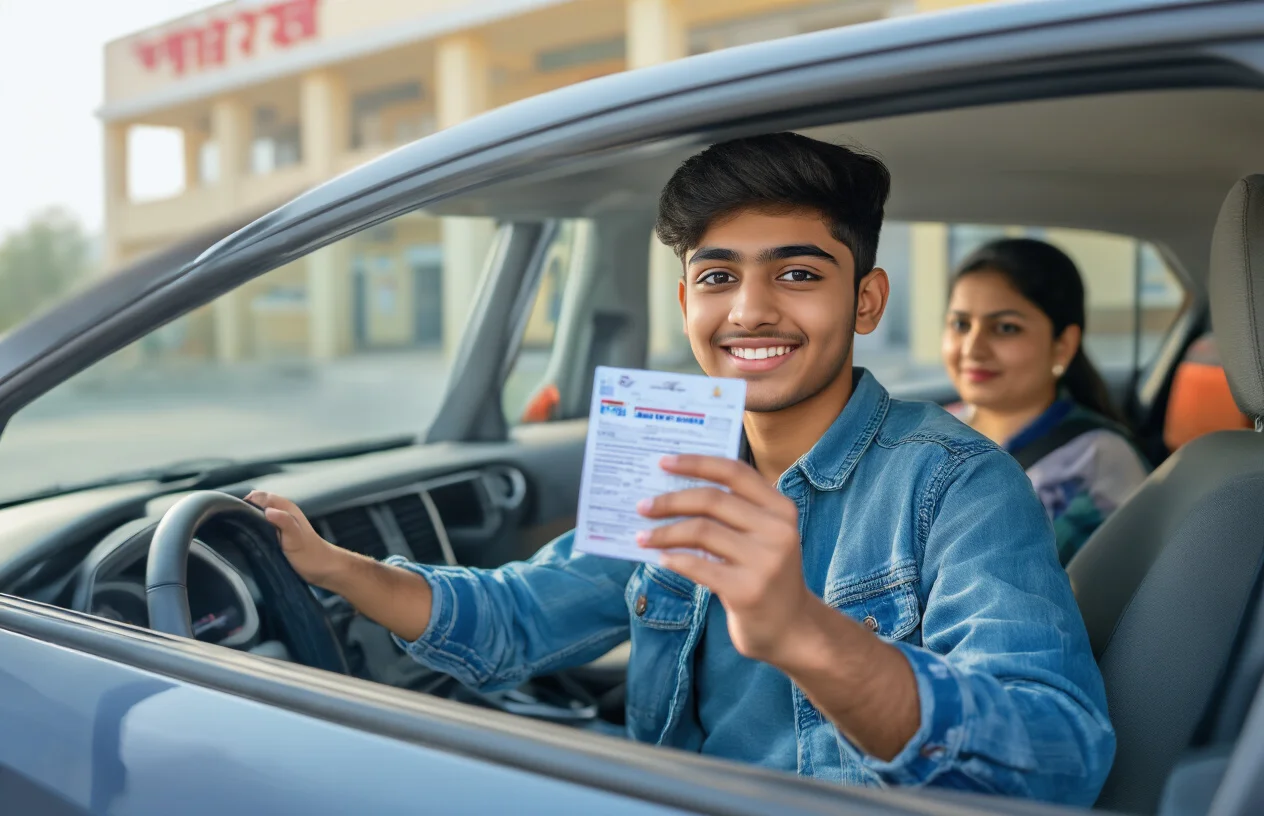
Punjab’s new policy allowing 16-year-olds to get a driving license has created a buzz among teens, parents, and driving instructors across the state. This Driving at 16 in Punjab policy represents a major shift in how young people can access transportation and independence.
This guide is designed for teenagers eager to get behind the wheel, parents wanting to understand the new rules, and anyone curious about how Punjab’s updated regulations work. We’ll break down the Punjab driving license eligibility requirements so you know exactly what’s needed to qualify. You’ll also get a clear walkthrough of the teen driver license application Punjab process, including all the paperwork and steps involved. Finally, we’ll cover the young driver training Punjab programs and safety measures that come with this new opportunity, especially for Driving at 16 in Punjab.
Understanding Punjab’s New 16-Year-Old Driving License Policy
changes from previous age requirements
Punjab’s decision to allow driving license at 16 Punjab represents a significant shift from the traditional minimum age of 18 years for four-wheeler licenses in India. Previously, teenagers could only obtain licenses for two-wheelers without gears (like scooters and mopeds) at 16, while cars and motorcycles required waiting until 18.
The new Punjab teen driving license policy breaks this barrier by permitting 16-year-olds to apply for light motor vehicle licenses under specific conditions. This change acknowledges the growing mobility needs of young people, especially in rural areas where transportation access significantly impacts education and employment opportunities.
Key differences include:
- Age requirement: Reduced from 18 to 16 for specific vehicle categories
- Vehicle restrictions: Limited to vehicles under 50cc initially, with graduated progression
- Supervision mandates: Required adult supervision during initial driving periods
- Geographic limitations: Restricted driving zones until full license eligibility
Legal framework and government approval process
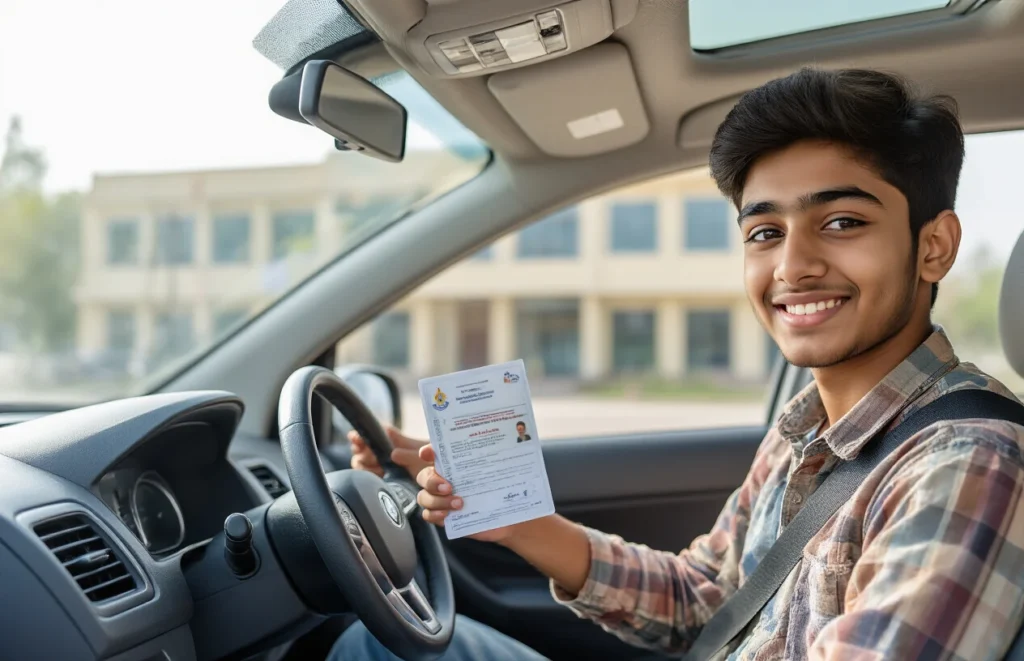
The 16 year old driving license India initiative in Punjab operates under a carefully structured legal framework that required extensive government consultation. The Punjab Transport Department worked closely with the Ministry of Road Transport and Highways to ensure compliance with national motor vehicle regulations while introducing state-specific provisions.
The approval process involved multiple stakeholders:
- State Transport Authority: Primary regulatory oversight
- Traffic Police Department: Safety protocol development
- Educational institutions: Integration with driver education programs
- Insurance companies: Risk assessment and coverage modifications
Legal safeguards include mandatory parental consent, enhanced insurance requirements, and stricter penalty structures for violations. The framework establishes clear accountability measures for both young drivers and their guardians.
Driving at 16 in Punjab: A New Chapter in Teen Independence
Alignment with national transportation policies
Punjab’s policy aligns with India’s broader vision of improving rural connectivity and reducing transportation barriers. The Punjab driving license eligibility requirements complement national initiatives focused on skill development and youth empowerment.
The state’s approach supports several national objectives:
- Rural development: Enhanced mobility for agricultural communities
- Educational access: Better transportation to schools and colleges
- Economic participation: Earlier entry into workforce opportunities
- Digital governance: Integration with national driving license databases
This alignment ensures that Punjab’s young drivers can seamlessly transition across state boundaries while maintaining consistent safety standards nationwide.
Eligibility Requirements for Teen Drivers in Punjab
Age Verification and Documentation Needed
Getting a driving license at 16 Punjab starts with proving your age through proper documentation. Teen applicants must provide their birth certificate issued by the Registrar of Births and Deaths or a school leaving certificate that clearly shows their date of birth. The Punjab motor vehicle authorities accept Aadhaar cards as primary age proof, but they must be supported by secondary documents like a passport or voter ID card of parents.
The Regional Transport Office (RTO) requires original documents along with two sets of photocopies. Self-attested copies won’t work – you need to get them verified by a gazetted officer or notary public. Digital copies stored on smartphones aren’t acceptable during the application process.
Teen drivers must also submit proof of address, which can include electricity bills, water bills, or rental agreements in the parent’s name. Bank passbooks and telephone bills are also valid address proofs, provided they’re not older than three months from the application date.
Educational Qualifications and School Enrollment Status
Punjab driving license eligibility requirements include specific educational criteria for teenage applicants. Students must be enrolled in a recognized educational institution – whether it’s a government school, private school, or registered coaching center preparing for competitive exams.
A school enrollment certificate from the principal or headmaster serves as mandatory documentation. This certificate should mention the student’s current class, academic session, and attendance record. Home-schooled students need additional verification through the state education board.
The academic performance factor plays a role too. Students with poor attendance records (below 75%) may face additional scrutiny during the application process. School authorities often coordinate with RTO officials to verify student details before license approval.
Parental Consent and Guardian Responsibilities
Punjab teen driving license policy places significant responsibility on parents and guardians. Both parents must provide written consent through a notarized affidavit accepting full legal responsibility for their child’s driving activities. Single parents need to submit additional custody documentation.
Guardians become legally liable for any traffic violations, accidents, or damages caused by the teen driver. This includes financial responsibility for fines, compensation claims, and legal proceedings. The consent form explicitly states these obligations and requires signatures from both the guardian and a witness.
Parents must also commit to supervising their teen’s driving practice sessions and ensuring compliance with all traffic rules. Regular monitoring reports may be requested by authorities during the initial license period.
Medical Fitness and Vision Testing Requirements
Medical clearance forms a crucial part of teen driver license application Punjab. Young applicants must undergo a comprehensive health checkup by a registered medical practitioner approved by the transport department. The medical certificate should be issued within 30 days of the license application.
Vision testing includes both distant and near vision assessments. Teen drivers need 6/6 vision in at least one eye, with the other eye having minimum 6/18 vision. Color blindness tests check the ability to distinguish between red, yellow, and green traffic signals.
Physical fitness evaluation covers hearing ability, limb functionality, and overall health condition. Students with corrective eyewear must demonstrate adequate vision with their glasses or contact lenses during the test. The medical officer also checks for any conditions that might impair driving ability, such as epilepsy or severe allergies.
Mental health assessment ensures emotional stability and decision-making capacity appropriate for handling motor vehicles responsibly.
Application Process and Documentation Steps
Online registration and form submission procedures
Punjab’s teen driving license application starts with the online portal of the Regional Transport Office (RTO). Applicants need to visit the official Punjab government transport website and create an account using their Aadhaar number and mobile phone. The digital form LL-1 (Learner’s License) must be completed with personal details, educational background, and guardian information since applicants are minors.
The system requires uploading scanned copies of all documents before submission. Parents or guardians must digitally sign the application as co-applicants, making them legally responsible for the young driver’s actions. After completing the form, applicants receive a unique reference number that tracks the application status.
The online system operates 24/7, but technical support is available only during business hours. Most applications get processed within 48 hours for initial review, though peak seasons may cause delays.
Required documents and verification timeline
Teen drivers applying for a driving license at 16 Punjab must submit specific documentation proving age, identity, and residence. Essential documents include:
- Birth certificate or Class 10 marksheet showing date of birth
- Aadhaar card (mandatory for all applicants)
- School identity card or bonafide certificate
- Parent/guardian Aadhaar and PAN card
- Residence proof (utility bills, property documents)
- Medical certificate from registered practitioner
- Passport-sized photographs (6 copies)
Punjab teen driving license policy requires additional consent forms signed by both parents or legal guardians. School principals must provide a character certificate confirming the student’s disciplinary record.
Document verification typically takes 3-5 working days. The RTO contacts applicants if any documents need clarification or resubmission. Original documents must be presented during the physical verification process.
Fee structure and payment methods
The fee structure for teen driver license application Punjab includes multiple components:
| Component | Amount (INR) |
|---|---|
| Learner’s License Fee | 150 |
| Test Fee | 300 |
| License Issuance | 200 |
| Smart Card Fee | 60 |
| Service Charges | 40 |
| Total | 750 |
Additional charges may apply for retests (₹300 per attempt) or expedited processing (₹500 extra). Payment methods include online banking, UPI, debit/credit cards, and demand drafts. Cash payments are not accepted at most RTOs.
The system generates digital receipts instantly for online payments. Bank transaction failures require 3-5 business days for refund processing.
Appointment scheduling for tests and interviews
After successful document verification, applicants can schedule their learner’s license test through the online portal. Punjab driving test for minors requires both written and practical components, conducted on different days.
Available time slots typically range from 9 AM to 4 PM on weekdays, with limited Saturday slots. Popular RTOs in Chandigarh, Ludhiana, and Amritsar often have waiting periods of 2-3 weeks, while smaller centers may offer same-week appointments.
The interview component involves both the applicant and parents meeting with RTO officials. They assess the teenager’s understanding of traffic rules, road safety awareness, and maturity level. Parents must demonstrate their commitment to supervising their teen’s driving activities.
Rescheduling is permitted once without additional charges if done 24 hours before the appointment. Multiple cancellations may result in application delays or additional fees.
Training and Testing Requirements for Young Drivers
Mandatory driving school enrollment and certification
Punjab’s teen driving license policy requires all 16-year-old applicants to complete certified driver education programs before obtaining their license. Young drivers must enroll in government-approved driving schools that specialize in teen driver training Punjab programs. These institutions follow standardized curriculum designed specifically for young learners.
The certification process involves completing a minimum of 30 hours of theoretical instruction and 15 hours of supervised practical training. Driving schools must be registered with the Punjab Motor Vehicle Department and employ qualified instructors who hold special certifications for teaching teenage drivers. Parents can verify school credentials through the official Punjab transport department website.
Students receive completion certificates only after demonstrating proficiency in vehicle operation, traffic rules understanding, and defensive driving techniques. This certification becomes a mandatory document for the license application process.
Written examination preparation and passing criteria
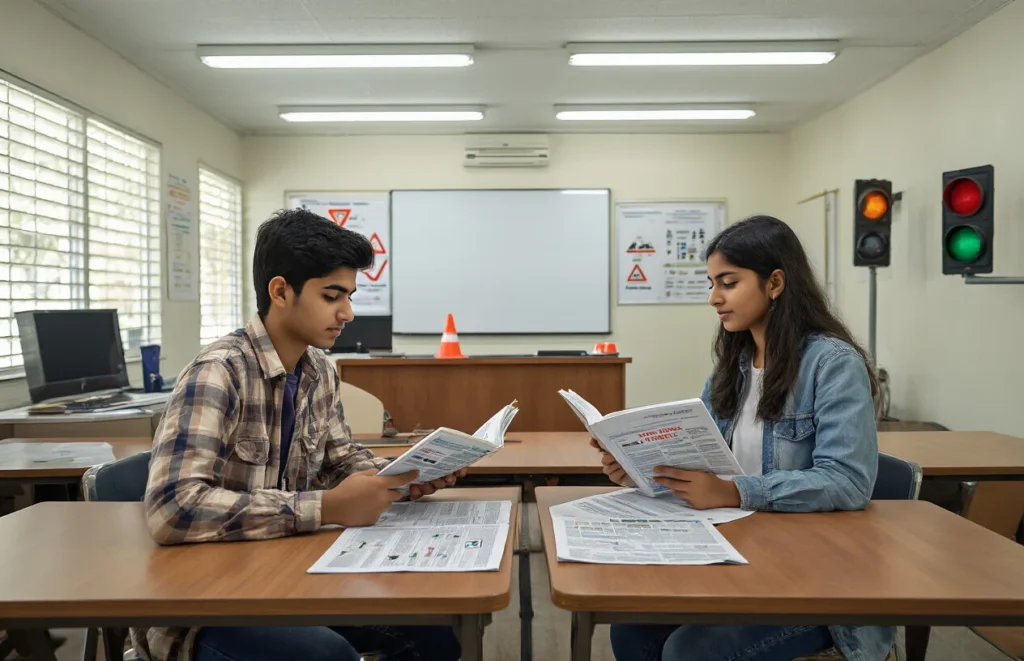
The Punjab driving test for minors includes a comprehensive written examination covering traffic rules, road signs, and safety regulations. The test consists of 30 multiple-choice questions, and candidates must score at least 24 correct answers to pass.
Key examination topics include:
- Traffic signal meanings and priorities
- Right-of-way rules at intersections
- Speed limits in different zones
- Parking regulations and restrictions
- Emergency vehicle protocols
- Pedestrian safety guidelines
Study materials are available in Punjabi, Hindi, and English through official government portals. Mock tests can be taken online to help students prepare effectively. The examination is computer-based and results are available immediately after completion.
Practical driving test components and evaluation
The hands-on driving assessment evaluates real-world driving skills under controlled conditions. Test routes include residential streets, main roads, and parking areas to assess various driving scenarios.
Evaluation criteria include:
| Component | Skills Assessed | Pass Requirement |
|---|---|---|
| Vehicle Control | Steering, braking, acceleration | 80% proficiency |
| Traffic Navigation | Lane changes, turns, merging | No critical errors |
| Parking Skills | Parallel and perpendicular parking | 2 of 3 attempts successful |
| Safety Awareness | Mirror checks, signal usage | Consistent demonstration |
Test vehicles are equipped with dual controls for instructor safety. The evaluation takes approximately 45 minutes and covers both urban and suburban driving conditions.
Road safety education and awareness programs
Young driver training Punjab includes mandatory participation in road safety workshops conducted by certified traffic safety instructors. These programs focus on accident prevention, defensive driving strategies, and understanding the consequences of reckless driving.
Interactive sessions cover real accident case studies, teaching young drivers about common mistakes that lead to crashes. Students learn about the impact of weather conditions, night driving challenges, and handling emergency situations.
The curriculum also addresses distracted driving risks, particularly mobile phone usage, and emphasizes the importance of wearing seatbelts. Parents attend joint sessions to understand their role in supporting safe driving habits and ongoing supervision requirements for teen drivers.
Benefits and Opportunities for Teen Drivers
Enhanced mobility for education and career opportunities
Getting a driving license at 16 Punjab opens doors to educational and career prospects that would otherwise remain out of reach. Young drivers can now access colleges, coaching centers, and vocational training institutes located far from their homes without depending on others. This flexibility becomes especially valuable for students pursuing specialized courses or attending institutions in different districts.
The Punjab teen driving license policy creates new internship and part-time job opportunities for 16-year-olds. Students can commute to workplaces, gaining practical experience while building their resumes early. Rural students particularly benefit from this mobility, as they can explore educational options in urban areas without relocating or burdening their families with transportation costs.
Early development of responsible driving habits
Starting the driving journey at 16 allows teenagers to develop mature driving skills under proper guidance. The young driver training Punjab programs emphasize defensive driving techniques, traffic rule adherence, and road safety awareness from the beginning. This early foundation creates more responsible drivers who understand the weight of their responsibilities behind the wheel.
Teen drivers learn to manage time effectively by coordinating their travel schedules with academic commitments. They develop planning skills, route optimization abilities, and emergency preparedness – all valuable life skills that extend beyond driving. The structured learning environment helps them understand vehicle maintenance basics, fuel efficiency, and cost management.
Economic advantages for families and students
The 16 year old driving license India policy brings significant cost savings for families. Parents no longer need to hire private vehicles or pay for expensive taxi rides for their children’s daily commute. Students can share transportation costs with friends, creating affordable group travel arrangements.
Young drivers can explore income-generating opportunities like delivery services, tutoring in nearby areas, or small business ventures that require mobility. This economic independence reduces financial pressure on families while teaching teenagers about money management and entrepreneurship.
| Financial Benefit | Monthly Savings | Annual Impact |
|---|---|---|
| Reduced taxi costs | ₹3,000-5,000 | ₹36,000-60,000 |
| Eliminated private vehicle hire | ₹2,000-4,000 | ₹24,000-48,000 |
| Shared fuel costs | ₹1,500-2,500 | ₹18,000-30,000 |
Reduced dependency on public transportation
Public transportation challenges in Punjab, including limited routes, irregular schedules, and overcrowding, particularly affect students in remote areas. The Punjab driving license eligibility requirements now allow teenagers to bypass these limitations completely.
Personal mobility eliminates waiting times at bus stops, missed connections, and the stress of unreliable transportation. Students can maintain consistent attendance, participate in after-school activities, and manage multiple commitments without transportation becoming a barrier. This independence also provides safety benefits, especially for female students who may face security concerns while using public transport during early morning or late evening hours.
The policy enables families to optimize their vehicle usage more effectively. Instead of parents juggling multiple drop-offs and pick-ups, teenage family members can handle their own transportation needs, freeing up family resources for other priorities.
Safety Measures and Restrictions for Young Drivers
Supervised Driving Requirements and Duration Limits
Teen drivers in Punjab must complete mandatory supervised driving periods before gaining full driving privileges. New license holders aged 16 must drive under adult supervision for the first six months after receiving their license. The supervising adult must be at least 25 years old and hold a valid driving license for minimum three years.
Daily driving limits restrict young drivers to maximum four hours of continuous driving, with mandatory breaks every two hours. Night driving between 10 PM and 6 AM requires adult supervision until the driver turns 18. Weekend driving hours extend slightly, allowing up to six hours with proper supervision.
The supervised period can be reduced to four months if the teen driver completes advanced driving courses from recognized institutes. Parents or guardians must maintain a driving log documenting supervised hours, routes taken, and any incidents during practice sessions.
Vehicle Type Restrictions and Engine Capacity Limits
Punjab’s teen driving license policy imposes specific vehicle restrictions to ensure road safety. Drivers aged 16-17 can only operate vehicles with engine capacity below 150cc for two-wheelers and below 1200cc for four-wheelers. Commercial vehicles, including taxis, buses, and heavy goods vehicles, remain completely off-limits until age 20.
| Vehicle Type | Engine Limit | Age Requirement |
|---|---|---|
| Two-wheeler | Below 150cc | 16+ years |
| Four-wheeler | Below 1200cc | 16+ years |
| Commercial Vehicle | Not Permitted | 20+ years |
| Heavy Vehicle | Not Permitted | 25+ years |
Motorcycles above 150cc require special endorsement after turning 18. Sports cars, racing vehicles, and modified engines face complete prohibition for teen drivers. Vehicle modifications that increase horsepower void the license validity immediately.
Traffic Violation Penalties and License Suspension Policies
Young drivers in Punjab face stricter penalties compared to adult drivers. First-time traffic violations result in mandatory safety courses and community service hours. Speeding violations exceeding 20 km/h above limits trigger immediate license suspension for 30 days.
Serious violations like drunk driving, reckless driving, or hit-and-run incidents result in permanent license cancellation. The teen must wait until age 21 to reapply for a new license. Mobile phone usage while driving carries hefty fines of ₹5,000 plus mandatory driving course completion.
Zero-tolerance policies apply to alcohol consumption – any detectable blood alcohol content results in immediate license revocation. Parents face joint liability for damages caused by their teen drivers, creating additional accountability measures.
Three minor violations within six months automatically suspend the license for 90 days. The suspension period doubles for each subsequent offense pattern, emphasizing the importance of safe driving habits from the beginning.
Punjab’s new driving license policy for 16-year-olds opens doors for young drivers while keeping safety at the forefront. The updated eligibility requirements, streamlined application process, and structured training programs create a clear path for teens to get behind the wheel. With proper documentation and completion of testing requirements, young drivers can access new opportunities for independence and mobility.
The policy balances freedom with responsibility through built-in safety measures and age-appropriate restrictions. Teen drivers and their families should take advantage of the comprehensive training programs and stay informed about all safety guidelines. If you’re 16 and ready to start driving in Punjab, begin gathering your documents today and look into approved driving schools to kickstart your journey toward safe, responsible driving.
Getting Your Driver’s License at 16: The Ultimate Guide to Freedom on Wheels
Picture this: You’re sitting in the passenger seat while your friends drive around, wishing you could be behind the wheel instead. The moment you turn 16, a whole new world of INDEPENDENCE opens up before you. Getting your driver’s license at 16 isn’t just about transportation – it’s about taking a major step toward adulthood & gaining the freedom to go wherever you want, whenever you want.
But here’s the thing: getting your license isn’t as simple as just walking into the DMV on your birthday. There’s a whole process you need to follow, paperwork to gather, tests to pass, & requirements to meet. Some teens think they can just show up & get their license in an hour, but that’s not how it works. The process actually starts months before you even take your driving test.
In this comprehensive guide, we’ll walk through everything you need to know about applying for your driver’s license at 16. From gathering the right documents to passing your road test, we’ll cover all the steps that will get you from dreaming about driving to actually holding that precious plastic card in your hands. Whether you’re just starting to think about getting your license or you’re already deep in the process, this article will help you understand exactly what you need to do. Ready to start your journey toward driving freedom? Let’s dive in!
Understanding the Learner’s Permit Process
Before you can even think about getting your full driver’s license, you’ll need to start with a learner’s permit. Think of this as your training wheels for driving – it lets you practice driving with an adult, but you can’t drive alone yet. Most states allow you to get your learner’s permit when you’re 15 or 15½ years old, which gives you several months to practice before you can apply for your full license at 16.
Getting your learner’s permit involves taking a written test about traffic laws, road signs, & safe driving practices. This test covers everything from what different road signs mean to how to handle dangerous driving situations. You’ll need to study your state’s driver’s manual, which you can usually find online or pick up at your local DMV office. Don’t just skim through it – really READ it carefully because the questions on the test come straight from that manual.
The permit process also requires you to bring specific documents to prove who you are & where you live. You’ll typically need your birth certificate or passport, proof that you live in your state (like a utility bill), & your Social Security card. Some states also require you to show proof that you’re enrolled in school & passing your classes. Make sure to check your state’s specific requirements because they can be different depending on where you live.
Once you have your learner’s permit, you’ll need to log a certain number of supervised driving hours before you can take your road test. Most states require between 40 to 100 hours of practice driving, with some of those hours being at night. Keep a detailed log of your driving practice because you’ll need to show this when you apply for your full license. Remember, the more you practice during this time, the better prepared you’ll be for your road test & for driving on your own.
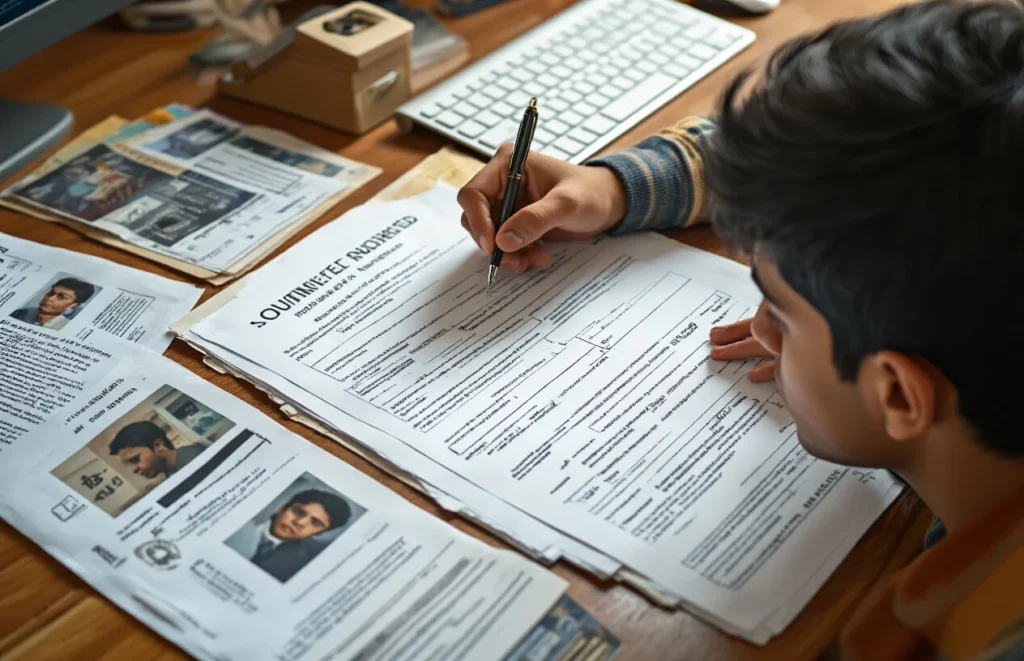
Gathering Required Documentation
One of the BIGGEST mistakes teens make when applying for their license is not having all the right paperwork. Walking into the DMV without the correct documents is like showing up to a test without a pencil – you’re not going anywhere until you have what you need. The documentation requirements might seem overwhelming at first, but once you know what to gather, it’s actually pretty straightforward.
First, you’ll need proof of your identity & age. This usually means bringing your certified birth certificate – not just a copy, but the official one with a raised seal. If you don’t have your birth certificate, a valid passport works too. Some states also accept other forms of identification, but birth certificates & passports are the most commonly accepted documents. If you can’t find your birth certificate, you’ll need to order a new one from the vital records office in the state where you were born, which can take several weeks.
Next, you’ll need proof of residency to show that you actually live in the state where you’re applying for your license. This can include things like utility bills, bank statements, or lease agreements that show your address. The tricky part is that these documents usually need to be in your parent’s name, not yours, since most 16-year-olds don’t have utility bills. Some states require two different types of residency proof, so make sure to bring multiple documents just in case.
You’ll also need your Social Security card or a W-2 form that shows your full Social Security number. Don’t try to just write down the number – they need to see the actual card or official document. Many families keep Social Security cards in safe deposit boxes or other secure locations, so make sure to track yours down well before your DMV appointment. If you’ve lost your Social Security card, you can get a replacement from the Social Security Administration, but this process can take time too.
Preparing for the Written & Road Tests
The written test is usually the first hurdle you’ll face, & while it might seem scary, it’s totally manageable if you prepare properly. Most state DMV websites offer practice tests that simulate the real exam, & taking these multiple times is one of the best ways to prepare. The questions cover traffic laws, road signs, & driving safety, but they’re designed to test practical knowledge that will actually help you be a safer driver.
When studying for the written test, don’t just memorize the answers to practice questions. Instead, try to understand WHY each answer is correct. For example, if a question asks about stopping distances, learn not just the numbers but understand that wet roads require more stopping distance because of reduced traction. This deeper understanding will help you not only pass the test but also become a better driver. Many teens make the mistake of cramming the night before, but studying a little bit each day for several weeks is much more effective.
The road test is where you’ll actually demonstrate your driving skills to a DMV examiner. This can be nerve-wracking, but remember that the examiner wants you to succeed – they’re not trying to trick you or make you fail. Practice all the basic maneuvers like parallel parking, three-point turns, & backing up. Make sure you’re comfortable with these skills because you’ll likely be asked to perform them during your test. Also practice driving in the area around your local DMV office, since that’s probably where your test will take place.
During the road test, the examiner will be looking for safe driving habits more than perfect technique. They want to see that you check your mirrors, use your turn signals, come to complete stops at stop signs, & follow the speed limit. Small mistakes like going slightly over the speed limit might not automatically fail you, but dangerous behaviors like running a stop sign definitely will. Stay calm, take your time, & remember that you’ve been practicing for months – you’re ready for this!
State-Specific Requirements & Variations
Here’s something that surprises many families: driver’s license requirements are NOT the same in every state. Each state has its own rules about everything from the minimum age for a learner’s permit to how many driving hours you need to log. This means that if you move from one state to another, the requirements might be completely different. Some states are more strict, while others are more relaxed about their requirements.
For example, some states have what’s called a “Graduated Driver Licensing” system, which gives new drivers more privileges gradually over time. Under these systems, even after you get your license at 16, you might have restrictions like not being able to drive late at night or not being able to have teenage passengers in your car. These restrictions typically last for several months or until you turn 17 or 18. Other states give you full driving privileges as soon as you pass your test.
The number of required practice hours also varies significantly between states. Some states require only 20-30 hours of supervised driving, while others require 60-100 hours. Some states also require a certain number of those hours to be nighttime driving. A few states even require you to take a professional driving course with a certified instructor, not just practice with your parents. Make sure you know exactly what your state requires so you don’t show up unprepared.
Another big difference is in the documentation requirements. While most states require similar basic documents, some have additional requirements. Some states require proof of car insurance even if you’ll be driving your parent’s car, while others don’t. Some require school enrollment verification, while others don’t care about your school status. Before you start the process, visit your state’s DMV website or call them directly to get the most up-to-date & accurate information about what you’ll need.
Tips for Success & Common Mistakes to Avoid
One of the most common mistakes teens make is rushing through the process. Getting your driver’s license is exciting, & it’s natural to want to get it as quickly as possible. However, taking shortcuts or not preparing properly usually leads to failed tests & frustration. Instead, give yourself plenty of time to practice & study. Most successful new drivers spend at least 3-6 months preparing from the time they get their learner’s permit.
Another major mistake is not practicing in different types of driving conditions. Many teens only practice driving in familiar areas during good weather, but your road test might happen in different conditions. Make sure to practice driving in rain, at night, in heavy traffic, & in unfamiliar areas. This broader experience will make you a more confident & capable driver, & you’ll be better prepared no matter what conditions you face during your test.
Don’t forget about the practical details either. Make sure the car you’ll use for your road test is in good working condition with current registration & insurance. Check that all the lights work, the horn works, & the windshield wipers function properly. The examiner will do a basic safety check before your test, & if something isn’t working, you might not be able to take your test that day. Also, make sure you’re familiar with the car you’ll be using – don’t try to take your test in a car you’ve never driven before.
Finally, manage your stress & anxiety about the tests. It’s normal to be nervous, but excessive anxiety can actually hurt your performance. Practice relaxation techniques like deep breathing, & remind yourself that you can retake the tests if necessary. Many successful drivers don’t pass on their first try, & that’s completely normal. The most important thing is to learn from any mistakes & keep improving your skills.
Conclusion: Your Path to Driving Independence
Getting your driver’s license at 16 is one of the most significant milestones in your teenage years. It represents FREEDOM, responsibility, & a major step toward adulthood. While the process might seem complicated with all its requirements, tests, & documentation, thousands of teens successfully earn their licenses every day. The key is to approach it systematically, prepare thoroughly, & give yourself enough time to learn properly.
Remember that getting your license is just the beginning of your journey as a driver. The real learning happens after you pass your test & start driving on your own. Always prioritize safety over speed or convenience, & continue to develop your skills even after you have your license. Consider your first few years of driving as an extended learning period where you’ll encounter new situations & challenges that will make you a better driver.
Don’t get discouraged if you don’t pass on your first try – many excellent drivers needed multiple attempts before earning their license. Each attempt is a learning opportunity that will ultimately make you safer & more confident behind the wheel. Focus on understanding the REASONS behind traffic laws & safe driving practices, not just memorizing rules for the test.
Take advantage of resources like driver’s education courses, online practice tests, & experienced drivers who can give you advice. Your parents, older siblings, or other trusted adults can be valuable mentors during this process. Ask questions, practice regularly, & always prioritize safety over everything else. Soon enough, you’ll be holding that license & enjoying the independence that comes with it. Start your preparation today, & before you know it, you’ll be ready to hit the road on your own!
Can a 16 year old get a driving license in Pakistan?
The age limit for Motorcycle/Motor Car Driving License is 18 Years. Is a driving license (learner/renewal license etc.) issued on receipt of NADRA? No, a driving license is not issued on NADRA receipt.