
To apply for the Punjab Green Tractor Scheme, go to the official website of the Punjab Agriculture Department at agripunjab.gov.pk or gts.punjab.gov.pk. Start by entering your CNIC number and mobile phone number to create your application. Next, choose your preferred tractor model, then upload the required documents, including a copy of your CNIC and your land ownership record (Fard). After that, accept the terms and conditions, complete the captcha verification, and submit your form. Once your application is successfully sent, you will receive a tracking ID to check your application status later.
To be eligible, you must own at least 5 acres of agricultural land and should not have received any tractor subsidy in the past under a government scheme.
The green tractor scheme online apply process helps farmers across India get subsidized eco-friendly tractors to boost their agricultural productivity. This government initiative targets small and marginal farmers who want to modernize their farming operations while supporting sustainable agriculture practices.
This guide covers everything you need to know about the green tractor scheme benefits and how the online application process works. We’ll walk through the eligibility requirements and documents you’ll need to gather before starting your application. You’ll also learn the complete step-by-step process for submitting your online tractor application and tracking its progress from start to finish.
Whether you’re new to government agricultural schemes or looking to upgrade your farming equipment, this comprehensive overview will help you navigate the green agriculture initiative successfully and secure your tractor subsidy scheme benefits.
Understanding Green Tractor Scheme Benefits and Eligibility
Financial subsidies and loan advantages for farmers
The green tractor scheme offers substantial financial relief to farmers looking to upgrade their agricultural equipment. Under this program, eligible farmers can receive subsidies ranging from 25% to 50% of the tractor’s cost, depending on their category and the type of eco-friendly tractor they choose. Small and marginal farmers typically receive higher subsidy percentages compared to other categories.
The agricultural tractor loan component makes modern equipment accessible through preferential interest rates. Banks participating in the scheme offer loans at rates 2-3% lower than standard agricultural equipment loans. The loan tenure extends up to 7 years with flexible repayment options aligned with harvest cycles.
Key financial benefits include:
- Direct subsidy on tractor purchase price
- Reduced processing fees for loan applications
- Collateral-free loans for amounts up to ₹5 lakhs for small farmers
- Insurance coverage at subsidized rates
- No prepayment penalties
Environmental impact reduction incentives
The eco-friendly tractor subsidy specifically targets equipment that meets stringent emission standards. Tractors eligible under this scheme must comply with BS-VI emission norms and demonstrate fuel efficiency improvements of at least 15% over conventional models. The environmental benefits create a win-win situation for farmers and the ecosystem.
Additional green incentives include:
- Extra 10% subsidy for electric or CNG-powered tractors
- Carbon credit eligibility for reduced emissions
- Priority approval for environment-friendly equipment
- Access to renewable energy integration programs
- Training programs on sustainable farming practices
The scheme promotes precision agriculture tools that minimize chemical usage and optimize resource consumption. Farmers adopting GPS-enabled tractors with variable rate technology receive additional support for implementing sustainable farming equipment practices.
Modernization support for agricultural equipment
Beyond tractors, the green agriculture initiative encompasses a comprehensive modernization approach. The scheme supports farmers in transitioning from traditional methods to technology-driven agriculture. This includes digital integration, automated farming solutions, and data-driven decision-making tools.
Modernization components cover:
- Smart farming attachments and implements
- Soil health monitoring systems
- Weather-based advisory services
- Market linkage platforms
- Technical training and skill development
The program facilitates partnerships with technology providers, ensuring farmers receive ongoing support for equipment maintenance and upgrades. Regional service centers provide technical assistance and spare parts availability.
Eligibility criteria for different farmer categories
Green tractor scheme eligibility varies across different farmer classifications. The scheme recognizes the diverse needs of India’s agricultural community and provides tailored support accordingly.
| Farmer Category | Land Holding | Subsidy Rate | Maximum Benefit |
|---|---|---|---|
| Small Farmers | Up to 2 hectares | 50% | ₹3.5 lakhs |
| Marginal Farmers | Up to 1 hectare | 50% | ₹3 lakhs |
| Other Farmers | 2-10 hectares | 40% | ₹2.5 lakhs |
| Large Farmers | Above 10 hectares | 25% | ₹2 lakhs |
Essential eligibility requirements include:
- Valid land ownership documents
- Active bank account with participating banks
- No outstanding defaults on previous agricultural loans
- Compliance with local environmental regulations
- Participation in crop insurance schemes (preferred)
Special categories receive additional considerations. Women farmers, SC/ST farmers, and farmers in tribal areas qualify for enhanced benefits. Young farmers under 35 years receive priority processing and additional technical support.
The online tractor application system verifies eligibility through integrated databases, ensuring transparent and efficient processing while preventing duplicate applications across different schemes.
Required Documents and Information for Online Application
Farm ownership and land records documentation
Getting your paperwork right is half the battle won when applying for the green tractor scheme online. You’ll need to prove that you actually own or legally operate farmland. Start by gathering your original land records, including the latest khata number, survey number, and pahani documents. These papers show the exact size and location of your agricultural land.
Property title deeds or patta documents are absolutely essential. Make sure these documents clearly show your name as the landowner or authorized cultivator. If you’re operating on leased land, bring along a registered lease agreement that’s valid for at least five years. Many states require the lease period to extend beyond the tractor’s loan tenure.
Revenue records like the 7/12 extract (in Maharashtra) or equivalent documents from your state revenue department will be needed. These records should be updated within the last six months. Village accountant certificates confirming your farming activities also strengthen your green tractor scheme application.
For joint ownership scenarios, all co-owners must provide their consent through notarized documents. If you’re part of a farmer producer organization or cooperative, membership certificates and farming rights documents become mandatory.
Income certificates and financial statements
Financial documentation proves your ability to contribute the farmer’s share and manage ongoing expenses. Start with your latest income certificate issued by the tehsildar or equivalent authority. This document should reflect your annual agricultural income accurately.
Bank statements for the past 12 months provide a clear picture of your financial transactions. Choose the account that shows regular farming-related activities like seed purchases, fertilizer expenses, and crop sale proceeds. These statements help officials understand your cash flow patterns.
Tax returns, even if you’re in the exempt category, demonstrate financial transparency. Agricultural income records, including crop sale receipts and market committee transaction records, support your income claims. If you have additional income sources like dairy farming or allied agricultural activities, include those documentation as well.
Credit history reports help assess your loan repayment capacity. A good credit score improves your chances of quick approval under the tractor subsidy scheme. If you have existing loans, provide current repayment statements to show your financial discipline.
Previous tractor purchase history verification
The online tractor application process requires complete transparency about any previous tractor purchases. If this is your first tractor purchase, you’ll need to provide a self-declaration stating the same. This declaration should be notarized and clearly mention that you haven’t received any government subsidy for agricultural equipment in the past.
For farmers who previously owned tractors, detailed records of the old machine become necessary. Include the original purchase invoice, registration certificate, and current ownership status. If you sold the previous tractor, provide the sale deed and transfer documents.
Insurance claim history related to agricultural equipment needs documentation. If your previous tractor was involved in any insurance claims, include those records. This information helps authorities assess the genuine need for a new eco-friendly tractor subsidy.
Some states maintain a database of subsidy beneficiaries. You might need to provide consent for verification through these databases. This cross-checking prevents duplicate benefits and ensures the green agriculture initiative reaches deserving farmers.
Bank account and KYC details
A dedicated bank account for the green tractor scheme transactions simplifies the process. Open a savings or current account specifically for this purpose if needed. The account should be in your name and linked to the same address mentioned in other documents.
Complete KYC documentation includes Aadhaar card, PAN card, and voter ID. These documents should have consistent name spellings across all papers. Address proof should match your agricultural land location or permanent residence. Passport-size photographs taken within the last six months complete the identification requirements.
Bank account statements should show sufficient balance to cover the farmer’s contribution. Some schemes require maintaining a minimum balance until the subsidy disbursement. Check with your bank about any special account features for agricultural loan schemes.
Digital payment readiness becomes important for the sustainable farming equipment purchase process. Ensure your bank account supports online transactions and is linked to your mobile number for OTP verification during the online application process.
Step-by-Step Online Application Process
Official portal registration and account creation
Navigating the green tractor scheme online application starts with creating your account on the official government portal. Visit the designated website for the green tractor scheme in your state or region – each state typically manages its own portal for agricultural subsidy schemes. Look for the “New User Registration” or “Sign Up” button, usually prominently displayed on the homepage.
During registration, you’ll need to provide basic information including your full name, mobile number, email address, and Aadhaar number. The system will send an OTP to your registered mobile number for verification. Create a strong password that combines letters, numbers, and special characters. Many portals now require biometric authentication for farmers, so ensure your Aadhaar is linked to your mobile number before starting the registration process.
After successful verification, you’ll receive a unique user ID that serves as your login credential for future access. Save this information securely as you’ll need it throughout the online application process and for tracking your application status.
Form completion with accurate personal details
The green tractor scheme application form contains multiple sections that require detailed and accurate information. Start with personal details including your complete name as per official documents, date of birth, gender, and contact information. The form will ask for your land ownership details, including survey numbers, total land area, and crop patterns.
Financial information plays a crucial role in determining your green tractor scheme eligibility. You’ll need to provide details about your annual income, existing loans, and banking information. Many applicants make mistakes in the land measurement units – ensure you’re using hectares or acres consistently as specified in your land documents.
The form includes sections for family details, including information about dependents and their occupations. Be particularly careful with numerical entries like phone numbers and bank account details, as errors here can delay processing significantly. Most portals include auto-save features, but manually save your progress frequently to avoid data loss.
Document upload procedures and file requirements
Document preparation is critical for a smooth online tractor application experience. The system typically accepts PDF, JPEG, and PNG formats with specific file size limitations, usually between 100KB to 2MB per document. Scan all documents in high resolution to ensure text clarity and official stamps are visible.
Required documents typically include:
- Identity Proof: Aadhaar card, voter ID, or driving license
- Land Documents: Revenue records, land ownership certificates, or lease agreements
- Income Certificates: From tehsildar or village revenue officer
- Bank Statements: Last 6 months for financial verification
- Caste Certificate: If applicable for reserved category benefits
- Agricultural Equipment Details: List of existing farm machinery
Before uploading, rename your files clearly (example: “AadhaarCard_JohnDoe.pdf”) for easy identification. The portal usually provides a preview option – use this to verify document clarity before final upload. Some states require digitally signed documents from authorized officials, so check your local requirements.
Upload documents in the exact sequence specified in the application form. Many portals allow multiple attempts for document upload, but avoid uploading the same document repeatedly as this can confuse the verification process.
Application submission and reference number generation
Review your entire application carefully before final submission. Most portals provide a preview option that displays all entered information and uploaded documents in a single view. Check for any missing mandatory fields marked with red asterisks or error messages.
The sustainable farming equipment subsidy application becomes official only after successful submission. Click the “Submit Application” button and wait for the system to process your request. The portal will generate a unique application reference number, typically a combination of letters and numbers specific to your state and scheme.
This reference number is your primary tool for tracking application progress and communicating with officials. Screenshot or write down this number immediately, as some portals don’t allow re-access to submitted applications without it. The system usually sends a confirmation SMS and email with your reference number and submission timestamp.
Payment of processing fees through online methods
Most green tractor scheme applications require a nominal processing fee ranging from ₹50 to ₹500, depending on your state and category. The portal integrates with multiple payment gateways supporting various payment methods including net banking, UPI, debit cards, and digital wallets.
Select your preferred payment method and ensure your bank account has sufficient funds plus a small buffer for transaction charges. Payment failures are common during peak application periods, so attempt transactions during off-peak hours when possible. The system generates a transaction ID upon successful payment – save this along with your application reference number.
Some states offer fee waivers for SC/ST applicants or farmers below certain income thresholds. Verify your eligibility for fee exemption before making payment. If payment fails after multiple attempts, most portals allow offline payment options through designated bank branches or post offices, though this may extend your processing timeline.
Application Status Tracking and Approval Timeline
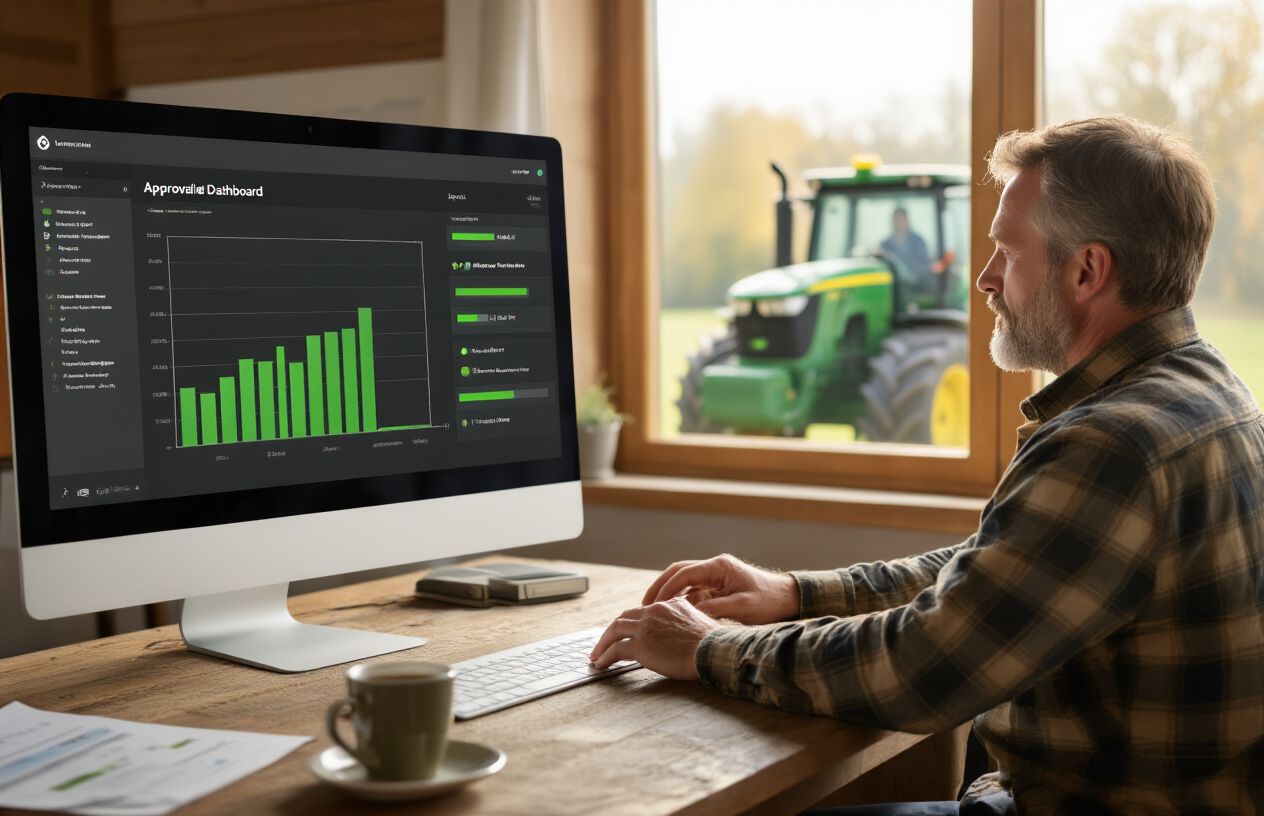
Real-time Status Monitoring Through Portal Dashboard
Once you’ve submitted your green tractor scheme application, the online portal becomes your window into the processing journey. The dashboard provides instant updates on your application’s progress, eliminating the need for repeated phone calls or office visits. You’ll receive a unique application reference number that serves as your tracking key throughout the entire process.
The portal displays clear status indicators that change as your application moves through different stages. These typically include “Application Received,” “Under Review,” “Document Verification,” “Technical Assessment,” and “Final Approval.” Each status change triggers automatic email notifications to your registered address, keeping you informed without constantly checking the portal.
Your dashboard also shows which documents have been successfully verified and which ones might need resubmission. If any supporting documents require clarification or replacement, the system highlights these immediately with specific instructions. This real-time feedback helps prevent delays and ensures you can address issues quickly.
The online tractor application portal often includes a messaging feature where you can directly communicate with processing officers. This eliminates confusion and provides a documented trail of all communications related to your tractor subsidy scheme application.
Expected Processing Duration and Approval Stages
The green tractor scheme approval process typically takes 30 to 45 working days from the date of complete application submission. However, this timeline can vary based on application volume, seasonal demand, and specific state implementations of the scheme.
The approval process follows a structured pathway with distinct stages:
| Stage | Duration | Key Activities |
|---|---|---|
| Initial Screening | 3-5 days | Basic eligibility verification |
| Document Verification | 7-10 days | Thorough document authentication |
| Technical Assessment | 10-15 days | Farm size validation and tractor requirement analysis |
| Financial Evaluation | 5-7 days | Credit assessment and subsidy calculation |
| Final Approval | 3-5 days | Committee review and approval letter generation |
During peak application periods, especially around sowing seasons, processing times may extend by 10-15 additional days. The agricultural tractor loan component, if included in your application, might require additional verification steps that can add another week to the timeline.
State-specific variations exist in processing speeds. Some states have streamlined their eco-friendly tractor subsidy approval mechanisms through enhanced digital infrastructure, while others still rely on manual verification processes that naturally take longer.
Common Reasons for Application Delays or Rejections
Document discrepancies represent the most frequent cause of green tractor scheme application delays. Mismatched names across different documents, outdated land records, or poor-quality scanned copies often trigger requests for resubmission. Always ensure your land ownership documents, identity proofs, and income certificates display consistent information.
Incomplete farm size documentation creates significant bottlenecks. Many applicants submit land records that don’t clearly establish the total cultivable area or fail to provide recent survey settlement records. The green tractor scheme eligibility criteria specifically require verified agricultural land ownership, and any ambiguity here leads to extended verification processes.
Financial inconsistencies between declared income and supporting documents frequently cause rejections. If your income tax returns, bank statements, or revenue records don’t align with your stated farming income, the application gets flagged for detailed scrutiny or outright rejection.
Bank account issues, including dormant accounts or accounts with insufficient transaction history, can derail approvals. The sustainable farming equipment subsidy requires an active bank account with regular agricultural transactions to validate genuine farming activities.
Technical specification mismatches also cause problems. Applying for tractor models that don’t meet the scheme’s environmental standards or exceed the prescribed power limits leads to automatic rejections. Always verify that your chosen tractor model appears on the approved green agriculture initiative equipment list before applying.
Missing co-applicant documents in joint applications create delays. If your spouse or family member is listed as a co-applicant, their documentation must be complete and properly notarized.
Post-Approval Procedures and Tractor Purchase Guidelines
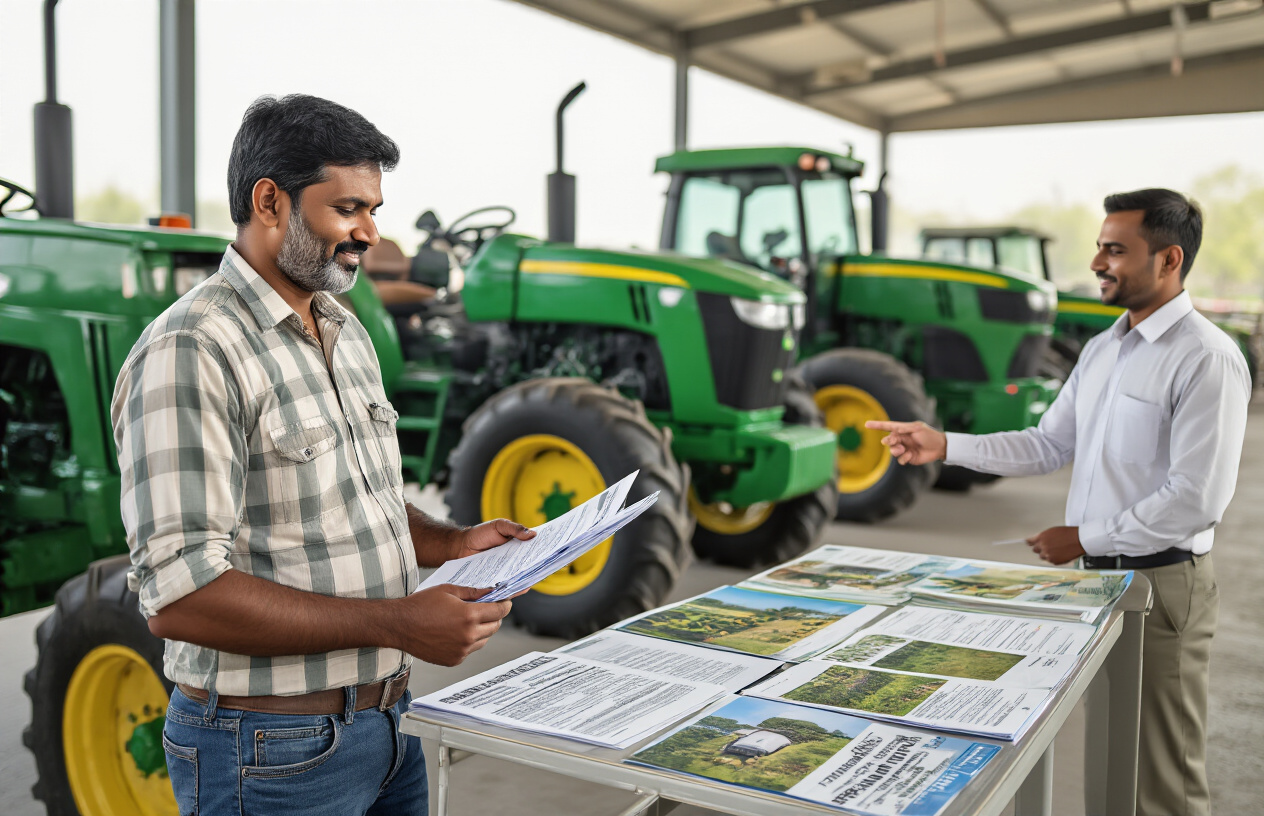
Subsidy Amount Disbursement Process
Once your green tractor scheme application gets approved, the subsidy disbursement follows a structured timeline. The government releases funds through a direct benefit transfer (DBT) system, ensuring transparency and reducing delays. Typically, you’ll receive 25-40% of the tractor’s cost as subsidy, depending on your category and the specific green tractor scheme benefits applicable in your state.
The disbursement happens in phases. First, you need to make the initial payment to the authorized dealer, showing proof of purchase. The dealer then submits your purchase invoice and required documents to the nodal agency. Within 15-30 days, the subsidy amount gets credited directly to your bank account linked during the online application process.
Banks play a crucial role if you’ve opted for an agricultural tractor loan alongside the subsidy. They coordinate with the implementing agency to ensure proper fund flow. Your bank statement will clearly show the subsidy credit with reference to the green tractor scheme transaction ID.
Keep all payment receipts and bank statements safe, as these serve as proof of subsidy received. Some states also provide SMS notifications when the subsidy gets processed and credited to your account.
Authorized Dealer Selection and Purchase Procedures
Choosing the right dealer makes a huge difference in your green tractor scheme experience. Only empaneled dealers can sell tractors under this eco-friendly tractor subsidy program. The government maintains an updated list of authorized dealers on the official portal where you completed your online tractor application.
Before visiting any dealer, verify their authorization status. Check their empanelment certificate and ensure they stock the specific tractor models covered under the scheme. Each dealer has a unique code that must appear on all purchase documents.
When making the purchase, the dealer will ask for your approval letter, identity proof, and bank details. They’ll prepare the purchase invoice showing the actual tractor cost, subsidy amount, and your payment. The invoice must clearly mention the scheme name and your application reference number.
| Document Required | Purpose | Copies Needed |
|---|---|---|
| Approval Letter | Scheme eligibility proof | 2 |
| Purchase Invoice | Subsidy claim | 3 |
| Bank Passbook | Payment verification | 1 |
| Identity Proof | Beneficiary verification | 2 |
Dealers typically handle the subsidy claim paperwork, but double-check all details before signing. The tractor’s chassis number, engine number, and model must match exactly with your approval letter specifications.
Compliance Requirements After Tractor Acquisition
Your responsibilities don’t end with purchasing the tractor. The green agriculture initiative comes with specific compliance requirements to ensure proper utilization of sustainable farming equipment. You cannot sell or transfer the tractor for at least seven years from the purchase date without prior approval from the implementing agency.
Regular monitoring visits by agricultural officers are common during the first three years. They’ll verify that you’re using the tractor for agricultural purposes and maintaining it properly. Keep maintenance records, fuel bills, and usage logs ready for these inspections.
Insurance remains mandatory throughout the compliance period. The policy should cover the full value of the tractor, including the subsidy amount. Some states require specific insurance companies or minimum coverage amounts.
Submit annual utilization reports through the same portal used for your original application. These reports should include:
- Total farming area covered
- Types of agricultural operations performed
- Maintenance and repair history
- Current condition of the tractor
Non-compliance can result in subsidy recovery along with penalties. The government maintains a monitoring system that tracks each beneficiary’s compliance status. If you need to relocate or change your farming operations, inform the nodal agency immediately to avoid compliance issues.
Some states offer additional incentives for exemplary compliance, such as priority consideration for future agricultural schemes or reduced interest rates on farm loans.

The Green Tractor Scheme offers farmers an incredible opportunity to modernize their farming operations while reducing financial burden through government subsidies. You now have all the essential information about eligibility requirements, necessary documents, and the straightforward online application process that can be completed from the comfort of your home.
Getting your application submitted is just the first step. Remember to regularly check your application status online and keep all your documents ready for verification. Once approved, follow the purchase guidelines carefully to ensure you receive your subsidy without any delays. Don’t let this valuable scheme pass you by – gather your documents, check your eligibility, and start your application today to take advantage of this government initiative designed to support modern, sustainable farming.
The green tractor scheme online apply process helps farmers across India get subsidized eco-friendly tractors to boost their agricultural productivity. This government initiative targets small and marginal farmers who want to modernize their farming operations while supporting sustainable agriculture practices.
This guide covers everything you need to know about the green tractor scheme benefits and how the online application process works. We’ll walk through the eligibility requirements and documents you’ll need to gather before starting your application. You’ll also learn the complete step-by-step process for submitting your online tractor application and tracking its progress from start to finish.
Whether you’re new to government agricultural schemes or looking to upgrade your farming equipment, this comprehensive overview will help you navigate the green agriculture initiative successfully and secure your tractor subsidy scheme benefits.
Understanding Green Tractor Scheme Benefits and Eligibility
Financial subsidies and loan advantages for farmers
The green tractor scheme offers substantial financial relief to farmers looking to upgrade their agricultural equipment. Under this program, eligible farmers can receive subsidies ranging from 25% to 50% of the tractor’s cost, depending on their category and the type of eco-friendly tractor they choose. Small and marginal farmers typically receive higher subsidy percentages compared to other categories.
The agricultural tractor loan component makes modern equipment accessible through preferential interest rates. Banks participating in the scheme offer loans at rates 2-3% lower than standard agricultural equipment loans. The loan tenure extends up to 7 years with flexible repayment options aligned with harvest cycles.
Key financial benefits include:
- Direct subsidy on tractor purchase price
- Reduced processing fees for loan applications
- Collateral-free loans for amounts up to ₹5 lakhs for small farmers
- Insurance coverage at subsidized rates
- No prepayment penalties
Environmental impact reduction incentives
The eco-friendly tractor subsidy specifically targets equipment that meets stringent emission standards. Tractors eligible under this scheme must comply with BS-VI emission norms and demonstrate fuel efficiency improvements of at least 15% over conventional models. The environmental benefits create a win-win situation for farmers and the ecosystem.
Additional green incentives include:
- Extra 10% subsidy for electric or CNG-powered tractors
- Carbon credit eligibility for reduced emissions
- Priority approval for environment-friendly equipment
- Access to renewable energy integration programs
- Training programs on sustainable farming practices
The scheme promotes precision agriculture tools that minimize chemical usage and optimize resource consumption. Farmers adopting GPS-enabled tractors with variable rate technology receive additional support for implementing sustainable farming equipment practices.
Modernization support for agricultural equipment
Beyond tractors, the green agriculture initiative encompasses a comprehensive modernization approach. The scheme supports farmers in transitioning from traditional methods to technology-driven agriculture. This includes digital integration, automated farming solutions, and data-driven decision-making tools.
Modernization components cover:
- Smart farming attachments and implements
- Soil health monitoring systems
- Weather-based advisory services
- Market linkage platforms
- Technical training and skill development
The program facilitates partnerships with technology providers, ensuring farmers receive ongoing support for equipment maintenance and upgrades. Regional service centers provide technical assistance and spare parts availability.
Eligibility criteria for different farmer categories
Green tractor scheme eligibility varies across different farmer classifications. The scheme recognizes the diverse needs of India’s agricultural community and provides tailored support accordingly.
| Farmer Category | Land Holding | Subsidy Rate | Maximum Benefit |
|---|---|---|---|
| Small Farmers | Up to 2 hectares | 50% | ₹3.5 lakhs |
| Marginal Farmers | Up to 1 hectare | 50% | ₹3 lakhs |
| Other Farmers | 2-10 hectares | 40% | ₹2.5 lakhs |
| Large Farmers | Above 10 hectares | 25% | ₹2 lakhs |
Essential eligibility requirements include:
- Valid land ownership documents
- Active bank account with participating banks
- No outstanding defaults on previous agricultural loans
- Compliance with local environmental regulations
- Participation in crop insurance schemes (preferred)
Special categories receive additional considerations. Women farmers, SC/ST farmers, and farmers in tribal areas qualify for enhanced benefits. Young farmers under 35 years receive priority processing and additional technical support.
The online tractor application system verifies eligibility through integrated databases, ensuring transparent and efficient processing while preventing duplicate applications across different schemes.
Required Documents and Information for Online Application
Farm ownership and land records documentation
Getting your paperwork right is half the battle won when applying for the green tractor scheme online. You’ll need to prove that you actually own or legally operate farmland. Start by gathering your original land records, including the latest khata number, survey number, and pahani documents. These papers show the exact size and location of your agricultural land.
Property title deeds or patta documents are absolutely essential. Make sure these documents clearly show your name as the landowner or authorized cultivator. If you’re operating on leased land, bring along a registered lease agreement that’s valid for at least five years. Many states require the lease period to extend beyond the tractor’s loan tenure.
Revenue records like the 7/12 extract (in Maharashtra) or equivalent documents from your state revenue department will be needed. These records should be updated within the last six months. Village accountant certificates confirming your farming activities also strengthen your green tractor scheme application.
For joint ownership scenarios, all co-owners must provide their consent through notarized documents. If you’re part of a farmer producer organization or cooperative, membership certificates and farming rights documents become mandatory.
Income certificates and financial statements
Financial documentation proves your ability to contribute the farmer’s share and manage ongoing expenses. Start with your latest income certificate issued by the tehsildar or equivalent authority. This document should reflect your annual agricultural income accurately.
Bank statements for the past 12 months provide a clear picture of your financial transactions. Choose the account that shows regular farming-related activities like seed purchases, fertilizer expenses, and crop sale proceeds. These statements help officials understand your cash flow patterns.
Tax returns, even if you’re in the exempt category, demonstrate financial transparency. Agricultural income records, including crop sale receipts and market committee transaction records, support your income claims. If you have additional income sources like dairy farming or allied agricultural activities, include those documentation as well.
Credit history reports help assess your loan repayment capacity. A good credit score improves your chances of quick approval under the tractor subsidy scheme. If you have existing loans, provide current repayment statements to show your financial discipline.
Previous tractor purchase history verification
The online tractor application process requires complete transparency about any previous tractor purchases. If this is your first tractor purchase, you’ll need to provide a self-declaration stating the same. This declaration should be notarized and clearly mention that you haven’t received any government subsidy for agricultural equipment in the past.
For farmers who previously owned tractors, detailed records of the old machine become necessary. Include the original purchase invoice, registration certificate, and current ownership status. If you sold the previous tractor, provide the sale deed and transfer documents.
Insurance claim history related to agricultural equipment needs documentation. If your previous tractor was involved in any insurance claims, include those records. This information helps authorities assess the genuine need for a new eco-friendly tractor subsidy.
Some states maintain a database of subsidy beneficiaries. You might need to provide consent for verification through these databases. This cross-checking prevents duplicate benefits and ensures the green agriculture initiative reaches deserving farmers.
Bank account and KYC details
A dedicated bank account for the green tractor scheme transactions simplifies the process. Open a savings or current account specifically for this purpose if needed. The account should be in your name and linked to the same address mentioned in other documents.
Complete KYC documentation includes Aadhaar card, PAN card, and voter ID. These documents should have consistent name spellings across all papers. Address proof should match your agricultural land location or permanent residence. Passport-size photographs taken within the last six months complete the identification requirements.
Bank account statements should show sufficient balance to cover the farmer’s contribution. Some schemes require maintaining a minimum balance until the subsidy disbursement. Check with your bank about any special account features for agricultural loan schemes.
Digital payment readiness becomes important for the sustainable farming equipment purchase process. Ensure your bank account supports online transactions and is linked to your mobile number for OTP verification during the online application process.
Step-by-Step Online Application Process
Official portal registration and account creation
Navigating the green tractor scheme online application starts with creating your account on the official government portal. Visit the designated website for the green tractor scheme in your state or region – each state typically manages its own portal for agricultural subsidy schemes. Look for the “New User Registration” or “Sign Up” button, usually prominently displayed on the homepage.
During registration, you’ll need to provide basic information including your full name, mobile number, email address, and Aadhaar number. The system will send an OTP to your registered mobile number for verification. Create a strong password that combines letters, numbers, and special characters. Many portals now require biometric authentication for farmers, so ensure your Aadhaar is linked to your mobile number before starting the registration process.
After successful verification, you’ll receive a unique user ID that serves as your login credential for future access. Save this information securely as you’ll need it throughout the online application process and for tracking your application status.
Form completion with accurate personal details
The green tractor scheme application form contains multiple sections that require detailed and accurate information. Start with personal details including your complete name as per official documents, date of birth, gender, and contact information. The form will ask for your land ownership details, including survey numbers, total land area, and crop patterns.
Financial information plays a crucial role in determining your green tractor scheme eligibility. You’ll need to provide details about your annual income, existing loans, and banking information. Many applicants make mistakes in the land measurement units – ensure you’re using hectares or acres consistently as specified in your land documents.
The form includes sections for family details, including information about dependents and their occupations. Be particularly careful with numerical entries like phone numbers and bank account details, as errors here can delay processing significantly. Most portals include auto-save features, but manually save your progress frequently to avoid data loss.
Document upload procedures and file requirements
Document preparation is critical for a smooth online tractor application experience. The system typically accepts PDF, JPEG, and PNG formats with specific file size limitations, usually between 100KB to 2MB per document. Scan all documents in high resolution to ensure text clarity and official stamps are visible.
Required documents typically include:
- Identity Proof: Aadhaar card, voter ID, or driving license
- Land Documents: Revenue records, land ownership certificates, or lease agreements
- Income Certificates: From tehsildar or village revenue officer
- Bank Statements: Last 6 months for financial verification
- Caste Certificate: If applicable for reserved category benefits
- Agricultural Equipment Details: List of existing farm machinery
Before uploading, rename your files clearly (example: “AadhaarCard_JohnDoe.pdf”) for easy identification. The portal usually provides a preview option – use this to verify document clarity before final upload. Some states require digitally signed documents from authorized officials, so check your local requirements.
Upload documents in the exact sequence specified in the application form. Many portals allow multiple attempts for document upload, but avoid uploading the same document repeatedly as this can confuse the verification process.
Application submission and reference number generation
Review your entire application carefully before final submission. Most portals provide a preview option that displays all entered information and uploaded documents in a single view. Check for any missing mandatory fields marked with red asterisks or error messages.
The sustainable farming equipment subsidy application becomes official only after successful submission. Click the “Submit Application” button and wait for the system to process your request. The portal will generate a unique application reference number, typically a combination of letters and numbers specific to your state and scheme.
This reference number is your primary tool for tracking application progress and communicating with officials. Screenshot or write down this number immediately, as some portals don’t allow re-access to submitted applications without it. The system usually sends a confirmation SMS and email with your reference number and submission timestamp.
Payment of processing fees through online methods
Most green tractor scheme applications require a nominal processing fee ranging from ₹50 to ₹500, depending on your state and category. The portal integrates with multiple payment gateways supporting various payment methods including net banking, UPI, debit cards, and digital wallets.
Select your preferred payment method and ensure your bank account has sufficient funds plus a small buffer for transaction charges. Payment failures are common during peak application periods, so attempt transactions during off-peak hours when possible. The system generates a transaction ID upon successful payment – save this along with your application reference number.
Some states offer fee waivers for SC/ST applicants or farmers below certain income thresholds. Verify your eligibility for fee exemption before making payment. If payment fails after multiple attempts, most portals allow offline payment options through designated bank branches or post offices, though this may extend your processing timeline.
Application Status Tracking and Approval Timeline
Real-time Status Monitoring Through Portal Dashboard
Once you’ve submitted your green tractor scheme application, the online portal becomes your window into the processing journey. The dashboard provides instant updates on your application’s progress, eliminating the need for repeated phone calls or office visits. You’ll receive a unique application reference number that serves as your tracking key throughout the entire process.
The portal displays clear status indicators that change as your application moves through different stages. These typically include “Application Received,” “Under Review,” “Document Verification,” “Technical Assessment,” and “Final Approval.” Each status change triggers automatic email notifications to your registered address, keeping you informed without constantly checking the portal.
Your dashboard also shows which documents have been successfully verified and which ones might need resubmission. If any supporting documents require clarification or replacement, the system highlights these immediately with specific instructions. This real-time feedback helps prevent delays and ensures you can address issues quickly.
The online tractor application portal often includes a messaging feature where you can directly communicate with processing officers. This eliminates confusion and provides a documented trail of all communications related to your tractor subsidy scheme application.
Expected Processing Duration and Approval Stages
The green tractor scheme approval process typically takes 30 to 45 working days from the date of complete application submission. However, this timeline can vary based on application volume, seasonal demand, and specific state implementations of the scheme.
The approval process follows a structured pathway with distinct stages:
| Stage | Duration | Key Activities |
|---|---|---|
| Initial Screening | 3-5 days | Basic eligibility verification |
| Document Verification | 7-10 days | Thorough document authentication |
| Technical Assessment | 10-15 days | Farm size validation and tractor requirement analysis |
| Financial Evaluation | 5-7 days | Credit assessment and subsidy calculation |
| Final Approval | 3-5 days | Committee review and approval letter generation |
During peak application periods, especially around sowing seasons, processing times may extend by 10-15 additional days. The agricultural tractor loan component, if included in your application, might require additional verification steps that can add another week to the timeline.
State-specific variations exist in processing speeds. Some states have streamlined their eco-friendly tractor subsidy approval mechanisms through enhanced digital infrastructure, while others still rely on manual verification processes that naturally take longer.
Common Reasons for Application Delays or Rejections
Document discrepancies represent the most frequent cause of green tractor scheme application delays. Mismatched names across different documents, outdated land records, or poor-quality scanned copies often trigger requests for resubmission. Always ensure your land ownership documents, identity proofs, and income certificates display consistent information.
Incomplete farm size documentation creates significant bottlenecks. Many applicants submit land records that don’t clearly establish the total cultivable area or fail to provide recent survey settlement records. The green tractor scheme eligibility criteria specifically require verified agricultural land ownership, and any ambiguity here leads to extended verification processes.
Financial inconsistencies between declared income and supporting documents frequently cause rejections. If your income tax returns, bank statements, or revenue records don’t align with your stated farming income, the application gets flagged for detailed scrutiny or outright rejection.
Bank account issues, including dormant accounts or accounts with insufficient transaction history, can derail approvals. The sustainable farming equipment subsidy requires an active bank account with regular agricultural transactions to validate genuine farming activities.
Technical specification mismatches also cause problems. Applying for tractor models that don’t meet the scheme’s environmental standards or exceed the prescribed power limits leads to automatic rejections. Always verify that your chosen tractor model appears on the approved green agriculture initiative equipment list before applying.
Missing co-applicant documents in joint applications create delays. If your spouse or family member is listed as a co-applicant, their documentation must be complete and properly notarized.
Post-Approval Procedures and Tractor Purchase Guidelines
Subsidy Amount Disbursement Process
Once your green tractor scheme application gets approved, the subsidy disbursement follows a structured timeline. The government releases funds through a direct benefit transfer (DBT) system, ensuring transparency and reducing delays. Typically, you’ll receive 25-40% of the tractor’s cost as subsidy, depending on your category and the specific green tractor scheme benefits applicable in your state.
The disbursement happens in phases. First, you need to make the initial payment to the authorized dealer, showing proof of purchase. The dealer then submits your purchase invoice and required documents to the nodal agency. Within 15-30 days, the subsidy amount gets credited directly to your bank account linked during the online application process.
Banks play a crucial role if you’ve opted for an agricultural tractor loan alongside the subsidy. They coordinate with the implementing agency to ensure proper fund flow. Your bank statement will clearly show the subsidy credit with reference to the green tractor scheme transaction ID.
Keep all payment receipts and bank statements safe, as these serve as proof of subsidy received. Some states also provide SMS notifications when the subsidy gets processed and credited to your account.
Authorized Dealer Selection and Purchase Procedures
Choosing the right dealer makes a huge difference in your green tractor scheme experience. Only empaneled dealers can sell tractors under this eco-friendly tractor subsidy program. The government maintains an updated list of authorized dealers on the official portal where you completed your online tractor application.
Before visiting any dealer, verify their authorization status. Check their empanelment certificate and ensure they stock the specific tractor models covered under the scheme. Each dealer has a unique code that must appear on all purchase documents.
When making the purchase, the dealer will ask for your approval letter, identity proof, and bank details. They’ll prepare the purchase invoice showing the actual tractor cost, subsidy amount, and your payment. The invoice must clearly mention the scheme name and your application reference number.
| Document Required | Purpose | Copies Needed |
|---|---|---|
| Approval Letter | Scheme eligibility proof | 2 |
| Purchase Invoice | Subsidy claim | 3 |
| Bank Passbook | Payment verification | 1 |
| Identity Proof | Beneficiary verification | 2 |
Dealers typically handle the subsidy claim paperwork, but double-check all details before signing. The tractor’s chassis number, engine number, and model must match exactly with your approval letter specifications.
Compliance Requirements After Tractor Acquisition
Your responsibilities don’t end with purchasing the tractor. The green agriculture initiative comes with specific compliance requirements to ensure proper utilization of sustainable farming equipment. You cannot sell or transfer the tractor for at least seven years from the purchase date without prior approval from the implementing agency.
Regular monitoring visits by agricultural officers are common during the first three years. They’ll verify that you’re using the tractor for agricultural purposes and maintaining it properly. Keep maintenance records, fuel bills, and usage logs ready for these inspections.
Insurance remains mandatory throughout the compliance period. The policy should cover the full value of the tractor, including the subsidy amount. Some states require specific insurance companies or minimum coverage amounts.
Submit annual utilization reports through the same portal used for your original application. These reports should include:
- Total farming area covered
- Types of agricultural operations performed
- Maintenance and repair history
- Current condition of the tractor
Non-compliance can result in subsidy recovery along with penalties. The government maintains a monitoring system that tracks each beneficiary’s compliance status. If you need to relocate or change your farming operations, inform the nodal agency immediately to avoid compliance issues.
Some states offer additional incentives for exemplary compliance, such as priority consideration for future agricultural schemes or reduced interest rates on farm loans.
The Green Tractor Scheme offers farmers an incredible opportunity to modernize their farming operations while reducing financial burden through government subsidies. You now have all the essential information about eligibility requirements, necessary documents, and the straightforward online application process that can be completed from the comfort of your home.
Getting your application submitted is just the first step. Remember to regularly check your application status online and keep all your documents ready for verification. Once approved, follow the purchase guidelines carefully to ensure you receive your subsidy without any delays. Don’t let this valuable scheme pass you by – gather your documents, check your eligibility, and start your application today to take advantage of this government initiative designed to support modern, sustainable farming.
The green tractor scheme online apply process helps farmers across India get subsidized eco-friendly tractors to boost their agricultural productivity. This government initiative targets small and marginal farmers who want to modernize their farming operations while supporting sustainable agriculture practices.
This guide covers everything you need to know about the green tractor scheme benefits and how the online application process works. We’ll walk through the eligibility requirements and documents you’ll need to gather before starting your application. You’ll also learn the complete step-by-step process for submitting your online tractor application and tracking its progress from start to finish.
Whether you’re new to government agricultural schemes or looking to upgrade your farming equipment, this comprehensive overview will help you navigate the green agriculture initiative successfully and secure your tractor subsidy scheme benefits.
Understanding Green Tractor Scheme Benefits and Eligibility
Financial subsidies and loan advantages for farmers
The green tractor scheme offers substantial financial relief to farmers looking to upgrade their agricultural equipment. Under this program, eligible farmers can receive subsidies ranging from 25% to 50% of the tractor’s cost, depending on their category and the type of eco-friendly tractor they choose. Small and marginal farmers typically receive higher subsidy percentages compared to other categories.
The agricultural tractor loan component makes modern equipment accessible through preferential interest rates. Banks participating in the scheme offer loans at rates 2-3% lower than standard agricultural equipment loans. The loan tenure extends up to 7 years with flexible repayment options aligned with harvest cycles.
Key financial benefits include:
- Direct subsidy on tractor purchase price
- Reduced processing fees for loan applications
- Collateral-free loans for amounts up to ₹5 lakhs for small farmers
- Insurance coverage at subsidized rates
- No prepayment penalties
Environmental impact reduction incentives
The eco-friendly tractor subsidy specifically targets equipment that meets stringent emission standards. Tractors eligible under this scheme must comply with BS-VI emission norms and demonstrate fuel efficiency improvements of at least 15% over conventional models. The environmental benefits create a win-win situation for farmers and the ecosystem.
Additional green incentives include:
- Extra 10% subsidy for electric or CNG-powered tractors
- Carbon credit eligibility for reduced emissions
- Priority approval for environment-friendly equipment
- Access to renewable energy integration programs
- Training programs on sustainable farming practices
The scheme promotes precision agriculture tools that minimize chemical usage and optimize resource consumption. Farmers adopting GPS-enabled tractors with variable rate technology receive additional support for implementing sustainable farming equipment practices.
Modernization support for agricultural equipment
Beyond tractors, the green agriculture initiative encompasses a comprehensive modernization approach. The scheme supports farmers in transitioning from traditional methods to technology-driven agriculture. This includes digital integration, automated farming solutions, and data-driven decision-making tools.
Modernization components cover:
- Smart farming attachments and implements
- Soil health monitoring systems
- Weather-based advisory services
- Market linkage platforms
- Technical training and skill development
The program facilitates partnerships with technology providers, ensuring farmers receive ongoing support for equipment maintenance and upgrades. Regional service centers provide technical assistance and spare parts availability.
Eligibility criteria for different farmer categories
Green tractor scheme eligibility varies across different farmer classifications. The scheme recognizes the diverse needs of India’s agricultural community and provides tailored support accordingly.
| Farmer Category | Land Holding | Subsidy Rate | Maximum Benefit |
|---|---|---|---|
| Small Farmers | Up to 2 hectares | 50% | ₹3.5 lakhs |
| Marginal Farmers | Up to 1 hectare | 50% | ₹3 lakhs |
| Other Farmers | 2-10 hectares | 40% | ₹2.5 lakhs |
| Large Farmers | Above 10 hectares | 25% | ₹2 lakhs |
Essential eligibility requirements include:
- Valid land ownership documents
- Active bank account with participating banks
- No outstanding defaults on previous agricultural loans
- Compliance with local environmental regulations
- Participation in crop insurance schemes (preferred)
Special categories receive additional considerations. Women farmers, SC/ST farmers, and farmers in tribal areas qualify for enhanced benefits. Young farmers under 35 years receive priority processing and additional technical support.
The online tractor application system verifies eligibility through integrated databases, ensuring transparent and efficient processing while preventing duplicate applications across different schemes.
Required Documents and Information for Online Application
Farm ownership and land records documentation
Getting your paperwork right is half the battle won when applying for the green tractor scheme online. You’ll need to prove that you actually own or legally operate farmland. Start by gathering your original land records, including the latest khata number, survey number, and pahani documents. These papers show the exact size and location of your agricultural land.
Property title deeds or patta documents are absolutely essential. Make sure these documents clearly show your name as the landowner or authorized cultivator. If you’re operating on leased land, bring along a registered lease agreement that’s valid for at least five years. Many states require the lease period to extend beyond the tractor’s loan tenure.
Revenue records like the 7/12 extract (in Maharashtra) or equivalent documents from your state revenue department will be needed. These records should be updated within the last six months. Village accountant certificates confirming your farming activities also strengthen your green tractor scheme application.
For joint ownership scenarios, all co-owners must provide their consent through notarized documents. If you’re part of a farmer producer organization or cooperative, membership certificates and farming rights documents become mandatory.
Income certificates and financial statements
Financial documentation proves your ability to contribute the farmer’s share and manage ongoing expenses. Start with your latest income certificate issued by the tehsildar or equivalent authority. This document should reflect your annual agricultural income accurately.
Bank statements for the past 12 months provide a clear picture of your financial transactions. Choose the account that shows regular farming-related activities like seed purchases, fertilizer expenses, and crop sale proceeds. These statements help officials understand your cash flow patterns.
Tax returns, even if you’re in the exempt category, demonstrate financial transparency. Agricultural income records, including crop sale receipts and market committee transaction records, support your income claims. If you have additional income sources like dairy farming or allied agricultural activities, include those documentation as well.
Credit history reports help assess your loan repayment capacity. A good credit score improves your chances of quick approval under the tractor subsidy scheme. If you have existing loans, provide current repayment statements to show your financial discipline.
Previous tractor purchase history verification
The online tractor application process requires complete transparency about any previous tractor purchases. If this is your first tractor purchase, you’ll need to provide a self-declaration stating the same. This declaration should be notarized and clearly mention that you haven’t received any government subsidy for agricultural equipment in the past.
For farmers who previously owned tractors, detailed records of the old machine become necessary. Include the original purchase invoice, registration certificate, and current ownership status. If you sold the previous tractor, provide the sale deed and transfer documents.
Insurance claim history related to agricultural equipment needs documentation. If your previous tractor was involved in any insurance claims, include those records. This information helps authorities assess the genuine need for a new eco-friendly tractor subsidy.
Some states maintain a database of subsidy beneficiaries. You might need to provide consent for verification through these databases. This cross-checking prevents duplicate benefits and ensures the green agriculture initiative reaches deserving farmers.
Bank account and KYC details
A dedicated bank account for the green tractor scheme transactions simplifies the process. Open a savings or current account specifically for this purpose if needed. The account should be in your name and linked to the same address mentioned in other documents.
Complete KYC documentation includes Aadhaar card, PAN card, and voter ID. These documents should have consistent name spellings across all papers. Address proof should match your agricultural land location or permanent residence. Passport-size photographs taken within the last six months complete the identification requirements.
Bank account statements should show sufficient balance to cover the farmer’s contribution. Some schemes require maintaining a minimum balance until the subsidy disbursement. Check with your bank about any special account features for agricultural loan schemes.
Digital payment readiness becomes important for the sustainable farming equipment purchase process. Ensure your bank account supports online transactions and is linked to your mobile number for OTP verification during the online application process.
Step-by-Step Online Application Process
Official portal registration and account creation
Navigating the green tractor scheme online application starts with creating your account on the official government portal. Visit the designated website for the green tractor scheme in your state or region – each state typically manages its own portal for agricultural subsidy schemes. Look for the “New User Registration” or “Sign Up” button, usually prominently displayed on the homepage.
During registration, you’ll need to provide basic information including your full name, mobile number, email address, and Aadhaar number. The system will send an OTP to your registered mobile number for verification. Create a strong password that combines letters, numbers, and special characters. Many portals now require biometric authentication for farmers, so ensure your Aadhaar is linked to your mobile number before starting the registration process.
After successful verification, you’ll receive a unique user ID that serves as your login credential for future access. Save this information securely as you’ll need it throughout the online application process and for tracking your application status.
Form completion with accurate personal details
The green tractor scheme application form contains multiple sections that require detailed and accurate information. Start with personal details including your complete name as per official documents, date of birth, gender, and contact information. The form will ask for your land ownership details, including survey numbers, total land area, and crop patterns.
Financial information plays a crucial role in determining your green tractor scheme eligibility. You’ll need to provide details about your annual income, existing loans, and banking information. Many applicants make mistakes in the land measurement units – ensure you’re using hectares or acres consistently as specified in your land documents.
The form includes sections for family details, including information about dependents and their occupations. Be particularly careful with numerical entries like phone numbers and bank account details, as errors here can delay processing significantly. Most portals include auto-save features, but manually save your progress frequently to avoid data loss.
Document upload procedures and file requirements
Document preparation is critical for a smooth online tractor application experience. The system typically accepts PDF, JPEG, and PNG formats with specific file size limitations, usually between 100KB to 2MB per document. Scan all documents in high resolution to ensure text clarity and official stamps are visible.
Required documents typically include:
- Identity Proof: Aadhaar card, voter ID, or driving license
- Land Documents: Revenue records, land ownership certificates, or lease agreements
- Income Certificates: From tehsildar or village revenue officer
- Bank Statements: Last 6 months for financial verification
- Caste Certificate: If applicable for reserved category benefits
- Agricultural Equipment Details: List of existing farm machinery
Before uploading, rename your files clearly (example: “AadhaarCard_JohnDoe.pdf”) for easy identification. The portal usually provides a preview option – use this to verify document clarity before final upload. Some states require digitally signed documents from authorized officials, so check your local requirements.
Upload documents in the exact sequence specified in the application form. Many portals allow multiple attempts for document upload, but avoid uploading the same document repeatedly as this can confuse the verification process.
Application submission and reference number generation
Review your entire application carefully before final submission. Most portals provide a preview option that displays all entered information and uploaded documents in a single view. Check for any missing mandatory fields marked with red asterisks or error messages.
The sustainable farming equipment subsidy application becomes official only after successful submission. Click the “Submit Application” button and wait for the system to process your request. The portal will generate a unique application reference number, typically a combination of letters and numbers specific to your state and scheme.
This reference number is your primary tool for tracking application progress and communicating with officials. Screenshot or write down this number immediately, as some portals don’t allow re-access to submitted applications without it. The system usually sends a confirmation SMS and email with your reference number and submission timestamp.
Payment of processing fees through online methods
Most green tractor scheme applications require a nominal processing fee ranging from ₹50 to ₹500, depending on your state and category. The portal integrates with multiple payment gateways supporting various payment methods including net banking, UPI, debit cards, and digital wallets.
Select your preferred payment method and ensure your bank account has sufficient funds plus a small buffer for transaction charges. Payment failures are common during peak application periods, so attempt transactions during off-peak hours when possible. The system generates a transaction ID upon successful payment – save this along with your application reference number.
Some states offer fee waivers for SC/ST applicants or farmers below certain income thresholds. Verify your eligibility for fee exemption before making payment. If payment fails after multiple attempts, most portals allow offline payment options through designated bank branches or post offices, though this may extend your processing timeline.
Application Status Tracking and Approval Timeline
Real-time Status Monitoring Through Portal Dashboard
Once you’ve submitted your green tractor scheme application, the online portal becomes your window into the processing journey. The dashboard provides instant updates on your application’s progress, eliminating the need for repeated phone calls or office visits. You’ll receive a unique application reference number that serves as your tracking key throughout the entire process.
The portal displays clear status indicators that change as your application moves through different stages. These typically include “Application Received,” “Under Review,” “Document Verification,” “Technical Assessment,” and “Final Approval.” Each status change triggers automatic email notifications to your registered address, keeping you informed without constantly checking the portal.
Your dashboard also shows which documents have been successfully verified and which ones might need resubmission. If any supporting documents require clarification or replacement, the system highlights these immediately with specific instructions. This real-time feedback helps prevent delays and ensures you can address issues quickly.
The online tractor application portal often includes a messaging feature where you can directly communicate with processing officers. This eliminates confusion and provides a documented trail of all communications related to your tractor subsidy scheme application.
Expected Processing Duration and Approval Stages
The green tractor scheme approval process typically takes 30 to 45 working days from the date of complete application submission. However, this timeline can vary based on application volume, seasonal demand, and specific state implementations of the scheme.
The approval process follows a structured pathway with distinct stages:
| Stage | Duration | Key Activities |
|---|---|---|
| Initial Screening | 3-5 days | Basic eligibility verification |
| Document Verification | 7-10 days | Thorough document authentication |
| Technical Assessment | 10-15 days | Farm size validation and tractor requirement analysis |
| Financial Evaluation | 5-7 days | Credit assessment and subsidy calculation |
| Final Approval | 3-5 days | Committee review and approval letter generation |
During peak application periods, especially around sowing seasons, processing times may extend by 10-15 additional days. The agricultural tractor loan component, if included in your application, might require additional verification steps that can add another week to the timeline.
State-specific variations exist in processing speeds. Some states have streamlined their eco-friendly tractor subsidy approval mechanisms through enhanced digital infrastructure, while others still rely on manual verification processes that naturally take longer.
Common Reasons for Application Delays or Rejections
Document discrepancies represent the most frequent cause of green tractor scheme application delays. Mismatched names across different documents, outdated land records, or poor-quality scanned copies often trigger requests for resubmission. Always ensure your land ownership documents, identity proofs, and income certificates display consistent information.
Incomplete farm size documentation creates significant bottlenecks. Many applicants submit land records that don’t clearly establish the total cultivable area or fail to provide recent survey settlement records. The green tractor scheme eligibility criteria specifically require verified agricultural land ownership, and any ambiguity here leads to extended verification processes.
Financial inconsistencies between declared income and supporting documents frequently cause rejections. If your income tax returns, bank statements, or revenue records don’t align with your stated farming income, the application gets flagged for detailed scrutiny or outright rejection.
Bank account issues, including dormant accounts or accounts with insufficient transaction history, can derail approvals. The sustainable farming equipment subsidy requires an active bank account with regular agricultural transactions to validate genuine farming activities.
Technical specification mismatches also cause problems. Applying for tractor models that don’t meet the scheme’s environmental standards or exceed the prescribed power limits leads to automatic rejections. Always verify that your chosen tractor model appears on the approved green agriculture initiative equipment list before applying.
Missing co-applicant documents in joint applications create delays. If your spouse or family member is listed as a co-applicant, their documentation must be complete and properly notarized.
Post-Approval Procedures and Tractor Purchase Guidelines
Subsidy Amount Disbursement Process
Once your green tractor scheme application gets approved, the subsidy disbursement follows a structured timeline. The government releases funds through a direct benefit transfer (DBT) system, ensuring transparency and reducing delays. Typically, you’ll receive 25-40% of the tractor’s cost as subsidy, depending on your category and the specific green tractor scheme benefits applicable in your state.
The disbursement happens in phases. First, you need to make the initial payment to the authorized dealer, showing proof of purchase. The dealer then submits your purchase invoice and required documents to the nodal agency. Within 15-30 days, the subsidy amount gets credited directly to your bank account linked during the online application process.
Banks play a crucial role if you’ve opted for an agricultural tractor loan alongside the subsidy. They coordinate with the implementing agency to ensure proper fund flow. Your bank statement will clearly show the subsidy credit with reference to the green tractor scheme transaction ID.
Keep all payment receipts and bank statements safe, as these serve as proof of subsidy received. Some states also provide SMS notifications when the subsidy gets processed and credited to your account.
Authorized Dealer Selection and Purchase Procedures
Choosing the right dealer makes a huge difference in your green tractor scheme experience. Only empaneled dealers can sell tractors under this eco-friendly tractor subsidy program. The government maintains an updated list of authorized dealers on the official portal where you completed your online tractor application.
Before visiting any dealer, verify their authorization status. Check their empanelment certificate and ensure they stock the specific tractor models covered under the scheme. Each dealer has a unique code that must appear on all purchase documents.
When making the purchase, the dealer will ask for your approval letter, identity proof, and bank details. They’ll prepare the purchase invoice showing the actual tractor cost, subsidy amount, and your payment. The invoice must clearly mention the scheme name and your application reference number.
| Document Required | Purpose | Copies Needed |
|---|---|---|
| Approval Letter | Scheme eligibility proof | 2 |
| Purchase Invoice | Subsidy claim | 3 |
| Bank Passbook | Payment verification | 1 |
| Identity Proof | Beneficiary verification | 2 |
Dealers typically handle the subsidy claim paperwork, but double-check all details before signing. The tractor’s chassis number, engine number, and model must match exactly with your approval letter specifications.
Compliance Requirements After Tractor Acquisition
Your responsibilities don’t end with purchasing the tractor. The green agriculture initiative comes with specific compliance requirements to ensure proper utilization of sustainable farming equipment. You cannot sell or transfer the tractor for at least seven years from the purchase date without prior approval from the implementing agency.
Regular monitoring visits by agricultural officers are common during the first three years. They’ll verify that you’re using the tractor for agricultural purposes and maintaining it properly. Keep maintenance records, fuel bills, and usage logs ready for these inspections.
Insurance remains mandatory throughout the compliance period. The policy should cover the full value of the tractor, including the subsidy amount. Some states require specific insurance companies or minimum coverage amounts.
Submit annual utilization reports through the same portal used for your original application. These reports should include:
- Total farming area covered
- Types of agricultural operations performed
- Maintenance and repair history
- Current condition of the tractor
Non-compliance can result in subsidy recovery along with penalties. The government maintains a monitoring system that tracks each beneficiary’s compliance status. If you need to relocate or change your farming operations, inform the nodal agency immediately to avoid compliance issues.
Some states offer additional incentives for exemplary compliance, such as priority consideration for future agricultural schemes or reduced interest rates on farm loans.
The Green Tractor Scheme offers farmers an incredible opportunity to modernize their farming operations while reducing financial burden through government subsidies. You now have all the essential information about eligibility requirements, necessary documents, and the straightforward online application process that can be completed from the comfort of your home.
Getting your application submitted is just the first step. Remember to regularly check your application status online and keep all your documents ready for verification. Once approved, follow the purchase guidelines carefully to ensure you receive your subsidy without any delays. Don’t let this valuable scheme pass you by – gather your documents, check your eligibility, and start your application today to take advantage of this government initiative designed to support modern, sustainable farming.
https://feestructure.pkGreen Tractor Scheme Online Apply
Frequently Asked Questions (FAQs)
1. What is the Punjab Green Tractor Scheme?
It is a government initiative that provides tractors to farmers at subsidized rates to improve agricultural productivity across Punjab.
2. Who can apply for the Punjab Green Tractor Scheme?
Farmers who own at least 5 acres of agricultural land and have not received a tractor under any previous government subsidy program are eligible to apply.
3. Where can I apply for the scheme?
You can apply online through the official portals:
- agripunjab.gov.pk
- gts.punjab.gov.pk
4. What documents are required for registration?
You will need:
- A valid CNIC
- Land ownership record (Fard)
- An active mobile number registered in your name
5. Is there any application fee?
No, applying for the Punjab Green Tractor Scheme is completely free.
6. How will I know if my application is successful?
After submitting the form, you will receive a tracking ID. You can use this ID on the official website to check your application status.
7. Can I apply if I already received a subsidized tractor before?
No, farmers who have previously received a tractor under any government subsidy program are not eligible.
8. What happens after I submit my application?
Your details and documents are verified by the concerned department. If approved, you will be informed about the next steps for tractor allocation.
9. Can I change my application details after submission?
In most cases, once the form is submitted, changes are not allowed. That’s why it’s important to review all information carefully before submitting.
10. Who can I contact for help or complaints?
You can contact the Punjab Agriculture Department helpline or visit your nearest agriculture office for guidance and support.